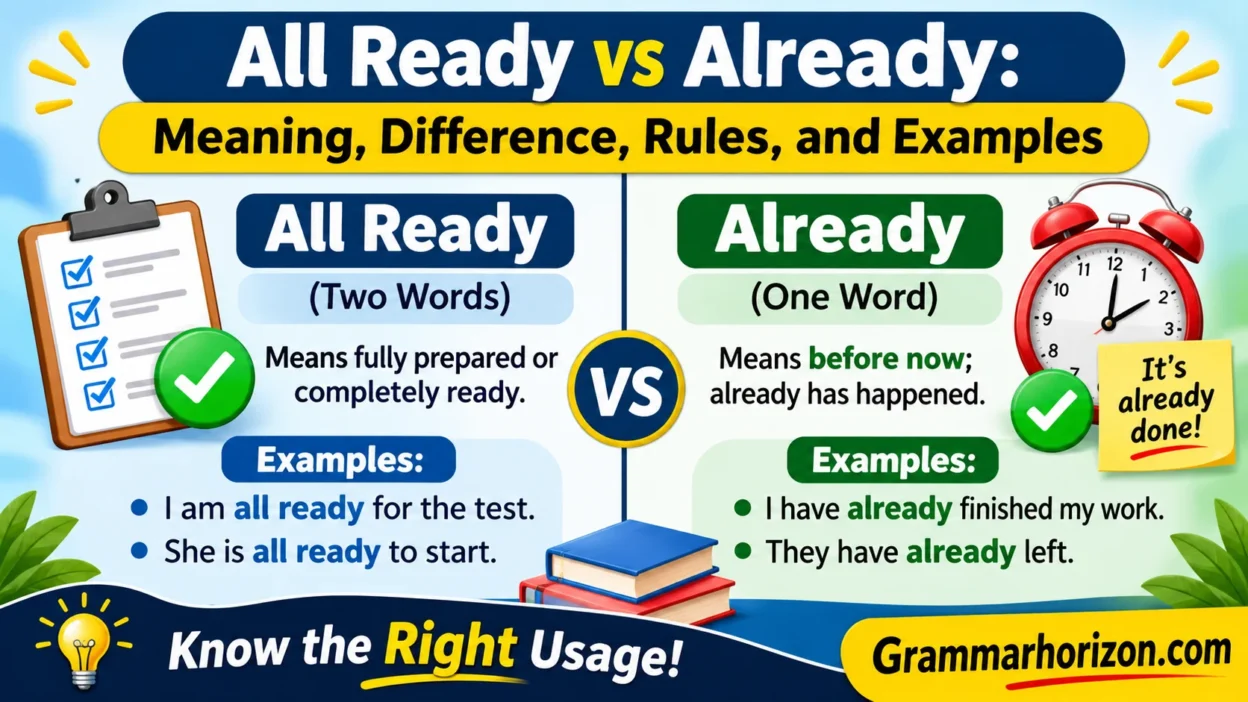
Grammar13 Min Read Numan AlionNovember 23, 2026 All Ready vs Already: Meaning, Difference, Rules, and Examples All Ready vs Already is a common spelling confusion among English learners because both English expressions have a similar appearance and similar…
12 Min Read Muhammad HaroononNovember 23, 2026 Capital vs Capitol: Meaning, Differences, Examples, and Usage Capital vs Capitol are easily confused words because they have similar… Grammar
12 Min Read Alyan AshrafonNovember 23, 2026 Analyze or Analyse: What Is the Difference? Analyze or Analyse is a common spelling confusion in English because… Grammar
12 Min Read Numan AlionNovember 21, 2026 Has Run vs. Has Ran: Which One Is Correct? Has Run vs. Has Ran often confuses English speakers because both forms… Grammar
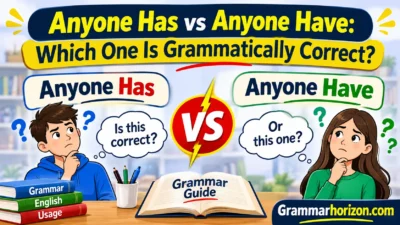
Grammar14 Min Read Numan AlionNovember 14, 2026 Anyone Has vs Anyone Have: Which One Is Grammatically Correct? Anyone Has vs Anyone Have is a common source of grammatical confusion in everyday English, especially when choosing the correct verb forms for… Discover More
Alyan AshrafonNovember 13, 2026 Weak or Week: Understanding the Difference, Meaning, and Correct Usage Weak or Week often confuses English learners because both words have the same pronunciation but different meanings and spellings. They are… Discover More
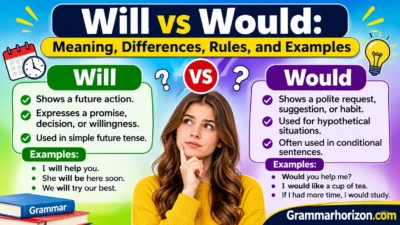
Grammar15 Min Read Muhammad HaroononNovember 13, 2026 Will vs Would: Meaning, Differences, Rules, and Examples Will vs Would can be confusing, but understanding their differences helps you improve your English speaking and writing. Both are modal… Discover More
Grammar11 Min Read Numan AlionNovember 12, 2026 Personal vs Personnel: Meaning, Differences, Examples, and Correct Usage Personal vs Personnel is a common English word comparison because both words look and sound similar, but they have different meanings and… Discover More
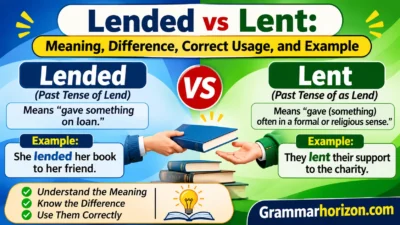
Grammar10 Min Read Alyan AshrafonNovember 12, 2026 Lended vs Lent: Meaning, Difference, Correct Usage, and Examples Lended vs Lent is a common grammar question because many English learners and English writers find it difficult to understand irregular verbs… Discover More
Grammar10 Min Read Numan AlionNovember 11, 2026 Bare vs Bear: Understanding the Difference and Meaning Bare vs Bear is a common English grammar topic because both words have the same pronunciation and sound alike, but their meanings, spelling,… Discover More
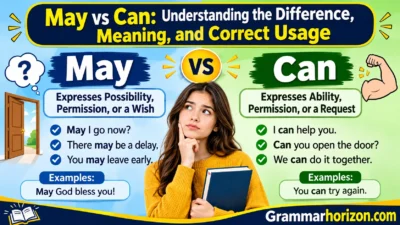
Grammar14 Min Read Alyan AshrafonNovember 10, 2026 May vs Can: Understanding the Difference, Meaning, and Correct Usage May vs Can is a common topic in English grammar because both modal verbs can express permission and possibility. However, their meaning… Discover More
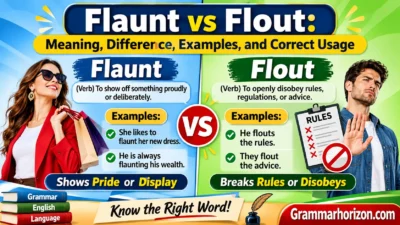
Grammar14 Min Read Muhammad HaroononNovember 10, 2026 Flaunt vs Flout: Meaning, Difference, Examples, and Correct Usage Flaunt vs Flout is a common source of confusion in English because both words have similar spellings and pronunciations, but they have… Discover More
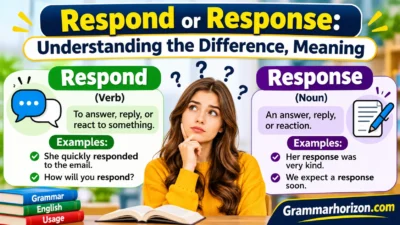
Grammar13 Min Read Numan AlionNovember 10, 2026 Respond or Response: Understanding the Difference, Meaning Respond or Response have related meanings, but they perform different grammatical functions in English. Respond is a verb that describes the… Discover More
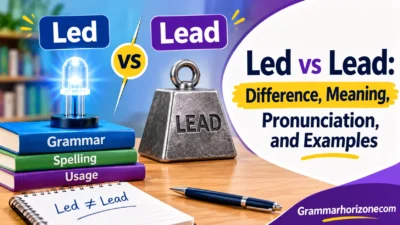
Grammar12 Min Read Alyan AshrafonNovember 8, 2026 Led vs Lead: Difference, Meaning, Pronunciation, and Examples Led vs Lead can confuse English writers because the words look alike but have different meanings, pronunciations, and grammatical uses. In the… Discover More