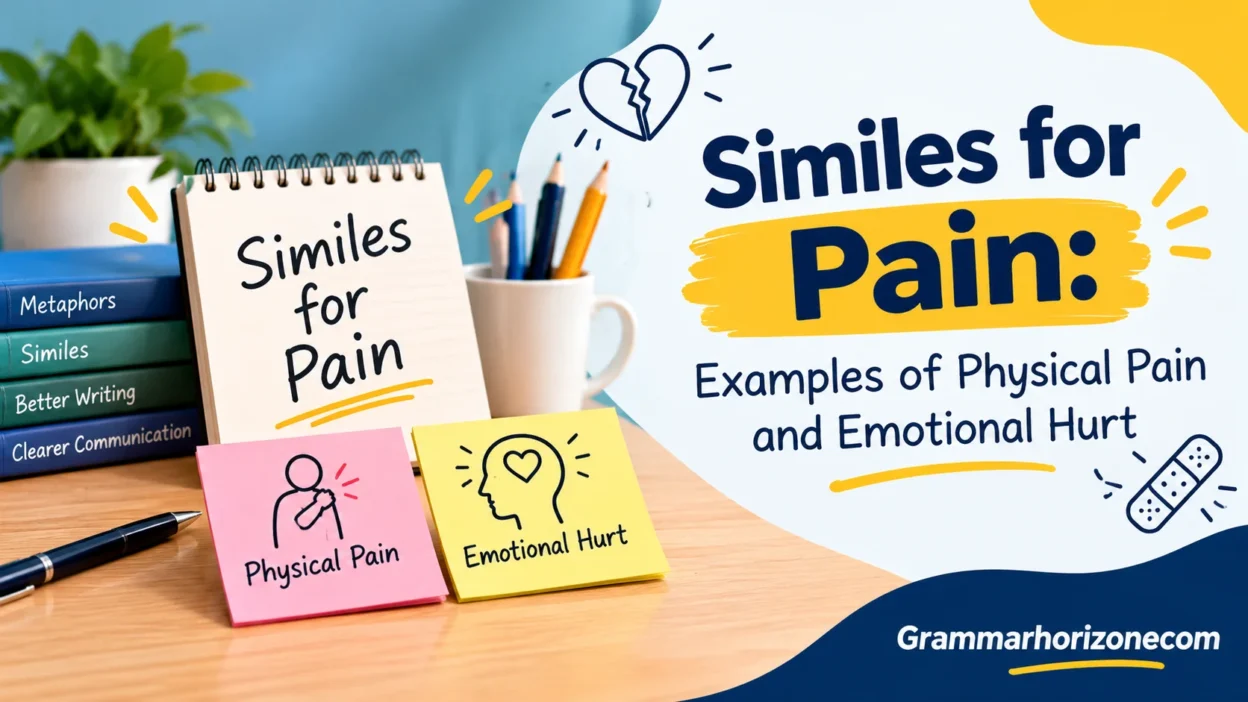
Similes for Pain help describe physical hurt and emotional suffering through simple comparisons that make painful experiences easier to imagine and understand. They turn ordinary words into clear, powerful descriptions that readers can remember.Pain can be difficult to explain with ordinary words, especially when painful experiences cause strong physical or emotional reactions. Similes make descriptions clearer, stronger, and more memorable by comparing pain to familiar things. For example, a sharp injury may feel like a needle piercing the skin, while a persistent headache may feel like a hammer pounding against the skull. Other examples include stabbing pain, throbbing pain, intense pain, and pressure that feels like a heavy stone resting on the chest.
When working on a school assignment or improving your own writing, a useful guide can help you explore more than 45 similes for pain and understand their meanings through practical examples. Good writing techniques include choosing specific details, using sensory details, and avoiding vague phrases. For example, describing a headache as a hammer pounding inside the skull creates a stronger image than simply saying that the head hurts. Similarly, comparing skin pain to fire gives readers a clear picture of the sensation. These powerful words and memorable comparisons improve descriptive writing and make literary expression more effective. The best word choice depends on the context and the type of pain you want to describe.
Whether you are completing schoolwork, creating a detailed scene, or expressing a difficult experience, the right simile can make your writing more natural, clear, and engaging. Choose expressive words that match the intensity of the feeling rather than using dramatic comparisons at random. A physical injury may need a sharp, direct comparison, while heartbreak may be better described through images of broken glass, a heavy stone, or an invisible weight. By using these writing techniques, you can help readers connect with the experience, understand its meaning, and picture the pain more clearly.
Quick Answer: What Are Some Similes for Pain?
A simile for pain compares a painful sensation or emotional experience to something familiar using words such as like or as. These comparisons help readers imagine how pain feels, how intense it is, and how it affects someone.
Here are some useful examples:
- Pain like a thousand needles: Describes many small, sharp sensations.
- Pain like fire beneath the skin: Suggests burning or stinging discomfort.
- Pain like a knife in the side: Conveys sharp, piercing pain.
- Pain like a hammer pounding the head: Describes repeated, throbbing discomfort.
- Pain like a thorn under the skin: Suggests persistent irritation.
- Grief like a heavy stone on the chest: Expresses the burden of sadness.
- Heartbreak like shattered glass: Represents emotional hurt and broken hopes.
- Pain like a wave crashing over you: Describes an overwhelming sensation.
- Pain like a rope pulled too tight: Suggests pressure or tension.
- Sadness like rain that never stops: Represents lingering emotional distress.
The best simile depends on the experience you’re describing. A comparison involving fire suggests burning pain, while one involving a hammer suggests repeated pounding.
What Is a Simile for Pain?
A simile is a figure of speech that compares two different things using like or as. A simile for pain connects a physical sensation or emotional experience with something familiar, helping readers understand the feeling more clearly.
For example, consider this sentence:
My headache felt like a hammer pounding against my skull.
The comparison gives readers a mental picture of repeated, throbbing pain. It communicates more than the simple statement, “My head hurts.”
A simile generally includes three elements:
- The experience: The pain or emotion being described.
- The comparison word: Usually like or as.
- The image: An object, sensation, or experience that resembles the pain.
Consider another example: “The burn stung like fire.” The burning sensation is the experience, like connecting the comparison, and fire creates the image.
Why Do Writers Use Similes for Pain?
Pain is often difficult to communicate because readers cannot directly feel another person’s experience. Similes bridge that gap by connecting an unfamiliar or complicated sensation to something recognizable.
Writers use similes to:
- Show intensity: Communicate whether pain feels mild, sharp, severe, or overwhelming.
- Create sensory imagery: Help readers imagine burning, pressure, throbbing, or stabbing sensations.
- Express emotions: Describe grief, rejection, loneliness, disappointment, and heartbreak.
- Develop characters: Show how someone experiences an injury or responds to emotional distress.
- Improve storytelling: Replace vague statements with vivid, memorable descriptions.
For example, “Her feet hurt after the hike” provides basic information. However, “Her feet felt like they were walking across hot coals” creates a stronger image of burning discomfort.
The second sentence allows readers to picture the experience rather than simply being told that someone feels pain.
Common Similes for Pain With Meanings and Examples
Some similes for pain work especially well because they compare discomfort to familiar objects, movements, or sensations. You can use these examples in essays, stories, poems, and everyday conversations.
| Simile for pain | Meaning | Example sentence |
| Like a thousand needles | Many small, sharp sensations | My fingers tingled like a thousand needles after sitting in the cold. |
| Like a knife in the side | Sharp, piercing discomfort | A sudden cramp felt like a knife in my side. |
| Like fire beneath the skin | Burning or stinging pain | The scrape burned like fire beneath my skin. |
| Like a hammer pounding | Repeated, throbbing pain | My headache felt like a hammer pounding against a wall. |
| Like a thorn under the skin | Persistent irritation | The ache felt like a thorn lodged beneath my heel. |
| Like an electric shock | Sudden, shooting pain | A jolt ran through my arm like an electric shock. |
| Like a tight rope pulling | Tension or tightness | My strained shoulder felt like a rope pulled too tight. |
| Like broken glass underfoot | Sharp pain during movement | Each step felt like walking across broken glass. |
Each comparison emphasizes a different quality of pain. Choose one that matches the sensation instead of relying on the most dramatic phrase.
Similes for Severe or Intense Pain
Severe pain can feel overwhelming, making it difficult to focus on anything else. Strong similes help convey that intensity without requiring lengthy explanations.
Pain Like a Blade Cutting Through Flesh
This simile suggests sharp, severe pain that feels as though something is cutting through the body. It can work in dramatic scenes involving an injury or sudden discomfort.
Example: The pain sliced through his leg like a blade cutting through cloth.
The image creates a sense of sharpness and intensity. It’s particularly effective when a character experiences a sudden injury.
Pain Like Lightning Flashing Through the Body
Lightning suggests speed, suddenness, and force. This comparison works well when describing a brief, shooting sensation that seems to travel through the body.
Example: A sudden jolt raced through her back like lightning flashing across a dark sky.
The word raced adds movement to the sentence, while the lightning comparison makes the sensation feel immediate.
Pain Like a Vice Crushing the Bones
A vice holds an object tightly and applies pressure. Comparing pain to a crushing vice creates an image of intense squeezing or compression.
Example: His injured hand throbbed as though it were trapped inside a vice.
This simile works when the goal is to emphasize pressure rather than a sharp, stabbing sensation.
Pain Like Glass Shards Piercing the Skin
Broken glass creates a sharp, jagged image. This comparison can describe prickling or piercing discomfort, particularly in fictional scenes where movement makes the pain feel worse.
Example: Every movement sent pain through her foot like tiny glass shards pressing against the skin.
The detail about movement helps readers understand when the sensation becomes more noticeable.
Pain Like a Burning Coal
A burning coal suggests concentrated heat that continues rather than disappearing immediately. This comparison can describe a persistent burning sensation in creative writing.
Example: The sting remained like a burning coal pressed against his palm.
The image emphasizes both heat and duration, making it suitable for describing pain that lingers.
Pain Like a Wave Crashing Over the Body
A powerful wave can knock someone off balance and leave them struggling to regain control. This simile describes pain that rises suddenly and feels overwhelming.
Example: A fresh wave of pain crashed over him whenever he tried to stand.
The word wave also suggests that the sensation may come and go rather than remain constant.
Similes for Sharp and Sudden Pain
Sharp pain often feels pointed, brief, or startling. Comparisons involving needles, pins, stings, and sudden impacts can help readers picture that immediate sensation.
Pain Like a Pin Pricking the Finger
This simile describes a small, focused sting that arrives quickly.
Example: The paper cut stung like a pin pricking my fingertip.
It’s a useful comparison for minor injuries that cause a sudden, localized sensation.
Pain Like a Needle Jabbing the Skin
A needle suggests a narrow, concentrated sensation. This comparison can describe a brief sting or repeated prickling.
Example: Every time she moved her knee, the pain felt like a needle jabbing the same spot.
The repeated action emphasizes how movement can bring the sensation back.
Pain Like a Bee Sting
A bee sting is familiar for its sudden, sharp sensation. The comparison works well for small injuries or unexpected discomfort.
Example: The scrape stung like a bee sting when water touched it.
This simile is short and easy to understand, making it suitable for everyday descriptions.
Pain Like a Spark of Electricity
An electrical spark suggests a quick jolt that appears and disappears rapidly.
Example: A spark of pain shot through his wrist like a sudden electrical jolt.
The phrase shot through adds a sense of movement and speed.
Pain Like a Punch to the Stomach
A punch suggests force and an immediate loss of comfort or balance. Writers can also use this comparison for shocking news or an emotional setback.
Example: The sudden cramp hit her like a punch to the stomach.
The comparison communicates the impact of the sensation without needing a long explanation.
Pain Like a Thorn Stabbing the Foot
A thorn suggests a small but sharp object causing discomfort in one specific area.
Example: Each step felt like a thorn stabbing the bottom of his foot.
This simile works particularly well in scenes involving walking, running, or movement after an injury.
Similes for Dull, Aching, and Lingering Pain
Not all pain feels sharp. Sometimes it settles into the background, grows slowly, or returns throughout the day. These similes describe discomfort that hangs on rather than striking once.
Pain Like a Heavy Weight Pressing Down
A heavy object suggests pressure, fatigue, and discomfort that makes movement difficult.
Example: The ache in his shoulders felt like a heavy weight pressing him into the chair.
The comparison emphasizes the burden of discomfort rather than a sudden sting.
Pain Like a Drum Beating Inside the Head
A drumbeat repeats with a steady rhythm. This comparison can communicate a pounding headache.
Example: Her headache felt like a drum beating inside her skull with every pulse.
The repeated sound creates an image of pain that keeps returning.
Pain Like a Bruise That Never Heals
A bruise can remain tender after the initial injury. Comparing pain to a bruise that never heals suggests lingering discomfort or emotional hurt.
Example: The memory stayed with him like a bruise that never fully healed.
This simile works for physical pain in some contexts, but it can also describe an old emotional wound.
Pain Like a Knot Tightening in the Muscles
A tightening knot creates an image of tension and restricted movement.
Example: The tension in her neck felt like a knot being pulled tighter with every passing minute.
This comparison is useful when describing muscle discomfort or a character’s growing physical tension.
Pain Like a Tooth Throbbing All Night
A throbbing toothache suggests persistent discomfort that repeatedly demands attention.
Example: His regret followed him like a toothache that kept him awake all night.
Although the sentence describes an emotion, the familiar physical comparison helps communicate how difficult the feeling is to ignore.
Pain Like a Slow, Steady Drip
A dripping tap can become irritating because the sound repeats without stopping. This comparison suggests pain that is mild but persistent.
Example: The dull ache in her knee felt like a slow drip that never let her forget it was there.
The simile is especially useful when the discomfort isn’t dramatic but continues to interfere with daily activities.
Similes for Emotional Pain
Physical pain affects the body, but emotional pain can leave a lasting impression on someone’s thoughts and feelings. Similes help express grief, heartbreak, rejection, loneliness, and disappointment when ordinary descriptions feel too limited.
Heartbreak Like a Knife Through the Heart
This familiar comparison conveys the sharp emotional shock of losing a relationship or discovering a painful truth.
Example: Her words cut through his hopes like a knife through the heart.
The comparison presents heartbreak as something sudden and deeply hurtful.
Grief Like a Heavy Stone on the Chest
A heavy stone suggests a burden that feels difficult to carry. Writers often use this image to express the weight of loss.
Example: After the funeral, grief settled over her like a heavy stone on her chest.
The image communicates how sadness can make even ordinary moments feel difficult.
Emotional Pain Like an Open Wound
An open wound suggests hurt that remains sensitive and easily aggravated. This comparison works well when someone keeps revisiting a painful experience.
Example: Every mention of the argument reopened the hurt like a finger pressing into an open wound.
The comparison emphasizes how certain reminders can make an old emotional injury feel fresh again.
Loneliness Like an Empty House in Winter
An empty house can feel silent, cold, and abandoned. Winter adds to that sense of isolation.
Example: After her closest friend moved away, the apartment felt like an empty house in winter.
This simile creates an atmosphere of quiet loneliness without directly stating that the character feels isolated.
Rejection Like a Door Slamming in Your Face
A slammed door suggests sudden exclusion. This comparison captures the disappointment of being dismissed or turned away.
Example: The rejection felt like a door slamming in his face just as he reached for the handle.
The image shows how rejection can abruptly end someone’s hopes or expectations.
Sadness Like Rain That Never Stops
Rain that continues for days suggests a mood that lingers and colors everything around it.
Example: Her sadness followed her like rain that never stopped falling.
This comparison works well when describing a character whose sadness affects everyday experiences.
Betrayal Like a Blade Twisting in the Back
This comparison suggests that someone has caused pain by breaking trust. It can also convey the feeling that new information makes an existing hurt worse.
Example: Learning that his friend had lied felt like a blade twisting in his back.
The image is particularly effective when the betrayal comes from someone the character trusted.
Heartache Like a Wound That Refuses to Heal
This simile describes emotional pain that remains long after the event that caused it.
Example: Years later, the loss still felt like a wound that refused to heal.
The comparison highlights the lasting effects of grief or heartbreak.
Disappointment Like a Balloon Losing Air
A balloon slowly losing air suggests excitement or hope fading away.
Example: Her excitement drained like air escaping from a balloon when she learned the event had been canceled.
This comparison offers a gentler way to describe disappointment without using violent or dramatic imagery.
Funny Similes for Pain
Humor can make descriptions of minor injuries more relatable. A playful comparison works particularly well in casual storytelling, comedy, and lighthearted dialogue.
| Funny simile | Example sentence |
| Like stepping on a Lego barefoot | Stepping on that toy felt like walking into a tiny battlefield. |
| Like sitting on a tack | The unexpected sting felt like sitting on a tack during a job interview. |
| Like wearing shoes two sizes too small | After the long walk, my feet felt trapped in shoes two sizes too small. |
| Like a tiny drummer inside my head | My headache felt like a tiny drummer practicing behind my eyes. |
| Like being attacked by a swarm of mosquitoes | My itchy legs felt like a buffet for mosquitoes. |
| Like having a tooth argue with your entire head | My toothache felt like one tiny tooth had declared war on my whole head. |
| Like wrestling a cactus | My stiff muscles felt like they’d spent the night wrestling a cactus. |
Funny similes often rely on exaggeration. They help readers recognize the discomfort while giving them a reason to smile.
However, context matters. A playful comparison may fit a minor injury, but it can undermine a serious scene involving a major loss or severe suffering.
Similes for Pain in Different Situations
The setting often determines which comparison feels natural. A simile that works for a headache may sound awkward in a scene about a twisted ankle or a painful breakup.
| Situation | Suitable simile | Example |
| Headache | Like a hammer pounding | My head throbbed like a hammer striking metal. |
| Stomachache | Like a knot twisting inside | Her stomach cramped like a knot being twisted tighter. |
| Muscle pain | Like a rope pulled too tight | My calves felt like ropes stretched to their limits. |
| Injury | Like a needle piercing the skin | The cut stung like a needle touching a raw spot. |
| Heartbreak | Like shattered glass | His hopes fell apart like glass shattering on a stone floor. |
| Grief | Like a heavy shadow | Grief followed her like a heavy shadow throughout the day. |
| Toothache | Like a drum pounding | The ache pulsed like a drum beating in the silence. |
| Rejection | Like a locked door | Her hopes met a locked door when the answer arrived. |
These examples are creative comparisons rather than medical descriptions. Real pain varies from person to person, so the best wording reflects the character’s experience instead of assuming everyone feels the same sensation.
How to Write Your Own Similes for Pain
Creating original similes for pain becomes easier when you focus on the specific sensation you want to describe. You don’t need complicated vocabulary. You need a clear comparison that fits the moment.
Identify the Type of Pain
First, decide whether the pain feels sharp, burning, throbbing, heavy, or persistent. For emotional pain, identify the main feeling, such as rejection, grief, guilt, or loneliness.
A sharp sensation might suggest a needle, thorn, or blade. Lingering sadness might suggest a fading light or a long, rainy afternoon.
Choose a Familiar Comparison
Think about objects, sounds, weather, or everyday experiences that share a similar quality.
For example, a tight muscle might resemble a knotted rope. A repeated headache might resemble a drumbeat. A sudden emotional shock might feel like a door slamming shut.
The comparison doesn’t have to be complicated. Familiar images often work best because readers understand them immediately.
Connect the Ideas With Like or As
Once you have a comparison, turn it into a complete sentence.
- Basic description: My shoulder hurt.
- Stronger simile: My shoulder felt like a rope pulled too tight.
- More detailed version: My shoulder felt like a rope pulled too tight whenever I reached for the top shelf.
The final version connects the comparison to a specific action, making the discomfort easier to imagine.
Avoid Clichés and Overused Comparisons
Phrases such as “a knife through the heart” are easy to understand, but readers encounter them often. You can create a fresher image by connecting the emotion to a specific detail.
Instead of writing, “His grief was like a storm,” try this:
His grief rolled through the quiet house like thunder that refused to fade.
The revised sentence adds sound and setting. It also gives the reader a more distinct image.
Use One Strong Simile at a Time
Too many comparisons can make a paragraph feel crowded. If pain is described as fire, needles, broken glass, and a hammer in the same sentence, readers may struggle to picture one clear sensation.
Choose the image that best matches the moment. Then use actions, dialogue, and other details to develop the scene.
For example, instead of writing, “The pain burned like fire, stabbed like a knife, and pounded like a hammer,” choose one comparison and build around it.
The pain pounded behind his eyes like a hammer against a locked door.
The sentence stays focused on one image, making the description easier to follow.
Simile vs. Metaphor for Pain
Similes and metaphors both create comparisons, but they express those comparisons differently.
| Feature | Simile | Metaphor |
| How it works | Directly compares two things | Describes one thing as another |
| Common wording | Uses like or as | Usually makes a direct comparison |
| Physical pain example | The pain felt like fire. | The pain was fire. |
| Emotional pain example | Her grief was like a storm. | Her grief was a storm. |
| Main effect | Makes the resemblance explicit | Creates a more direct image |
A simile makes the comparison clear. A metaphor makes the comparison feel more immediate.
Both can strengthen your writing. Use a simile when you want to show how an experience resembles something familiar. Use a metaphor when you want the comparison to feel direct and powerful.
Conclusion
Similes for pain make it easier to describe physical discomfort and emotional suffering in clear, memorable ways. Comparing a sharp injury to a needle, a headache to a pounding hammer, or heartbreak to shattered glass helps readers picture the experience. Whether you are writing a story, composing a poem, or completing a school assignment, the right simile can make your words more powerful and meaningful. Choose comparisons that match the type and intensity of pain you want to express, and use simple, descriptive language to help readers connect with the feeling.
Frequently Asked Questions
1. What is a simile for pain?
A simile for pain compares a painful feeling to something familiar using words such as like or as. For example, “The headache felt like a hammer pounding inside my skull” helps readers imagine intense pain.
2. What are some common similes for physical pain?
Common similes for physical pain include “like a needle piercing the skin,” “like fire burning through the body,” and “like a knife twisting in a wound.” These comparisons describe sharp, burning, or intense sensations.
3. How can I describe emotional pain with a simile?
You can compare emotional pain to familiar images. For example, “Heartbreak felt like shattered glass inside my chest” expresses deep sadness, while “Grief felt like a heavy stone on my heart” describes the weight of loss.
4. Why do writers use similes to describe pain?
Writers use similes to make descriptions more vivid and relatable. Instead of simply saying that something hurts, they compare the feeling to a familiar experience, helping readers understand its intensity and emotional impact.
5. What is the difference between a simile and a metaphor for pain?
A simile directly compares two things using like or as, such as “The pain felt like fire.” A metaphor describes one thing as another, such as “The pain was fire burning inside me.” Both techniques make descriptions more expressive.