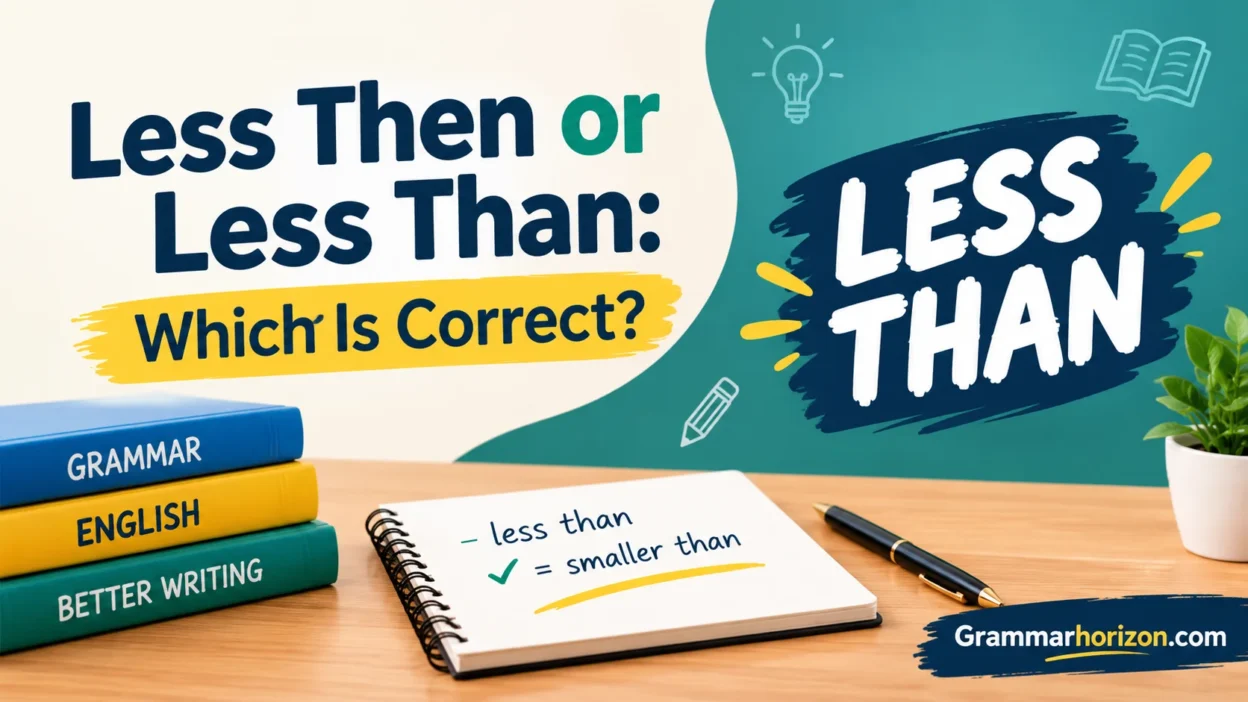
Less Then or Less Than is a common English spelling and grammar question that appears in everyday writing. When you compare two amounts, numbers, or things, use less than. For example, “The box weighs less than five pounds.” Here, than clearly shows a comparison, while then does not fit the sentence.
The word then has a different job. It usually connects to time, order, or something that happens next. You might say, “Finish your homework, then watch TV.” The meaning is about what comes next rather than a comparison. This simple distinction can help you avoid the common English mistake of writing less then when you mean less than.
When I review emails, school assignments, articles, and other forms of writing, I find that this error often comes from how the two words sound when spoken. Although they may seem almost identical, their meanings and grammatical roles are completely different. Once you connect than with comparisons and then with time or order, the difference becomes much easier to remember.
Quick Answer: Less Then or Less Than?
Less than is the correct phrase when you want to make a comparison. It means a smaller amount, number, degree, value, or measurement.
Less then is generally incorrect when you’re trying to express a comparison. The word then has a different job in English. It usually refers to a time, sequence, or consequence.
Correct:
- The package weighs less than five pounds.
- She finished the task in less than an hour.
- There were less than 20 people at the event.
Incorrect for comparison:
- The package weighs less then five pounds.
- She finished the task in less then an hour.
- There were less then 20 people at the event.
What Does Less Than Mean?
Less than is a comparative expression. You use it when one amount, number, measurement, or degree is smaller than another.
For example:
- This laptop costs less than $500.
- The trip takes less than three hours.
- He is less than six feet tall.
- The bottle contains less than one liter.
- The movie lasted less than two hours.
In each sentence, than introduces the thing being compared. The comparison may involve money, time, size, distance, quantity, age, or another measurable quality.
The expression can also describe a degree rather than a physical quantity. For instance, “The task was less than exciting” suggests that the task wasn’t very exciting.
Less Than for Quantities and Measurements
You’ll see less than constantly when people discuss measurements. It works naturally with time, money, weight, distance, temperature, and many other quantities.
Consider these examples:
| Context | Example |
| Time | The meeting lasted less than an hour. |
| Money | The shirt costs less than $30. |
| Weight | The bag weighs less than 10 pounds. |
| Distance | The store is less than a mile away. |
| Age | The child is less than five years old. |
| Temperature | The temperature dropped to less than 32°F. |
| Quantity | We used less than two cups of flour. |
The comparison doesn’t always need to name both sides explicitly. In “It costs less than expected,” the comparison is between the actual cost and the expected cost.
What Does Then Mean?
Then has nothing to do with the comparative function of than. It commonly refers to time, sequence, or a consequence.
For example:
- I lived there then.
- Finish your homework, then watch TV.
- First, wash the vegetables. Then, cut them.
- If you’re ready, then we can leave.
The word can point backward or forward in time. It can also show that one event follows another.
That’s why replacing than with then creates a grammatical problem when you’re making a comparison.
Then for Sequence
One of the most common uses of them is showing what happens next.
For example:
First, read the instructions. Then, complete the form.
Here, then means something like “after that.”
Now compare it with:
This form takes less than five minutes to complete.
The second sentence compares the amount of time with five minutes. Therefore, than is required.
Then in Conditional Statements
You may also see then after an if clause:
If it rains, then we’ll stay home.
Here, then introduces the result of the condition. It doesn’t make a comparison.
This distinction becomes especially useful when sentences contain both words:
If you spend less than $50, then you won’t qualify for free shipping.
Both words are correct in this sentence. Than creates the comparison with $50. Then introduces the resulting condition.
Less Then or Less Than: The Key Difference
The easiest way to understand less then or less than is to look at the function of each word.
| Word | Meaning | Main Use | Example |
| Than | Used to compare | Comparisons | She earns less than I do. |
| Then | At that time or afterward | Time and sequence | Eat dinner, then leave. |
The words sound similar, especially in fast speech. Their meanings, however, are entirely different.
If the sentence answers “Which is smaller?”, you probably need than.
If it answers “What happened next?” or “When?”, you probably need then.
When to Use Less Than
Use less than when comparing a smaller quantity, number, value, measurement, or degree with another.
Comparing Quantities
Use less than when one quantity is smaller than another.
The new model uses less than half the energy.
The sentence compares energy consumption. Than signals that comparison.
You can use the same structure with countless everyday situations:
- Spend less than you planned.
- Drink less than eight glasses.
- Use less than one tablespoon.
- Save less than $100.
- Wait less than ten minutes.
Comparing Time
Time expressions frequently use less than.
Examples include:
- The repair took less than an hour.
- I’ll be there in less than 20 minutes.
- The application takes less than five minutes.
- She completed the exam in less than two hours.
This is one reason the mistake appears so often. People frequently type less then when discussing short periods.
Comparing Degrees or Qualities
Less than doesn’t only work with numbers. It can compare qualities or degrees.
For example:
- The result was less than satisfactory.
- His response was less than helpful.
- The experience was less than enjoyable.
In these examples, the expression suggests that something falls below an expected standard or degree.
Comparing Ages and Measurements
Measurements provide another common setting.
The building is less than 100 feet tall.
The child is less than ten years old.
The lake is less than two miles away.
These sentences all compare a measurement against a specific reference point.
When Then Is Correct
Here’s where things get interesting. Then can appear near less, but that doesn’t make less thn a comparative phrase.
For example:
Spend less, then save the money you have left.
Here, less works independently. Then connects two actions and means “after that.”
Another example:
She earned less that year, then found a better-paying job.
Again, then refers to the sequence of events.
This distinction matters because you shouldn’t automatically assume that less must be followed by than. The words can occur separately when the sentence has a different structure.
How to Remember Than or Then
A simple memory trick can save you from this mistake.
Than = comparison.
Think of sentences such as:
- taller than
- faster than
- cheaper than
- less than
- more than
Whenever you’re comparing, than is usually the word you need.
Then = time or sequence.
Think:
- first, then
- now, then
- back then
- if this happens, then that happens
One tiny letter separates them. Their jobs are different.
Case Study: Why the Wrong Word Changes the Sentence
Consider this sentence:
The project took less than three weeks.
At first glance, the meaning seems obvious. The writer intends to say that the project took under three weeks.
However, then doesn’t express that comparison. A reader familiar with standard English recognizes less than as the correct construction.
The corrected sentence is:
The project took less than three weeks.
Now consider a different sentence:
Finish the project, then submit the report.
Here, then works perfectly because it tells the reader what happens afterward.
The difference comes down to function rather than appearance.
Less Than Sentence Examples
Here are several natural examples you can use as models:
- The package arrived in less than two days.
- This phone costs less than $300.
- The recipe takes less than 30 minutes.
- He weighs less than 150 pounds.
- The road is less than five miles long.
- The company spent less than expected.
- The temperature stayed less than 40°F.
- The task required less than an hour.
- She was less than thrilled with the result.
- The solution contains less than one percent salt.
Notice the pattern. In every example, than connects less with a comparison.
Less Then or Less Than: Quick Comparison
| Feature | Less Than | Less Then |
| Standard comparative expression | Yes | No |
| Used to compare quantities | Yes | No |
| Used with the < symbol | Yes | No |
| Shows time or sequence | No | Then can show time or sequence |
| Example | It costs less than $20. | Incorrect for that meaning |
| Standard English choice for comparison | Correct | Incorrect |
Conclusion
Knowing the difference between Less Then or Less Than can make your English writing more accurate. Use less than for comparisons, while then usually refers to time, order, or what happens next. Although these words sound similar when spoken, their meanings are different. Remembering this simple rule can help you avoid a common English mistake.
Read More: https://grammarhorizon.com/usage-or-useage/
FAQs
Q1. Is “less then” correct?
No. Less than is the standard expression when you are making a comparison.
Q2. What does “less than” mean?
Less than means a quantity or amount is smaller when compared with another quantity or amount.
Q3. What does “then” mean?
Then commonly refers to time, order, or something that happens next.
Q4. Why do people write “less then”?
People often confuse than and then because they sound similar when spoken.
Q5. Is “less than 10” correct?
Yes. Less than 10 is correct when you mean a number below 10.
Q6. Can “then” be used for comparisons?
No. Use than for standard comparisons, such as “This costs less than that.”
Q7. How can I remember “less than”?
Connect than with comparisons. If you are comparing two amounts or things, less than is usually the correct choice.