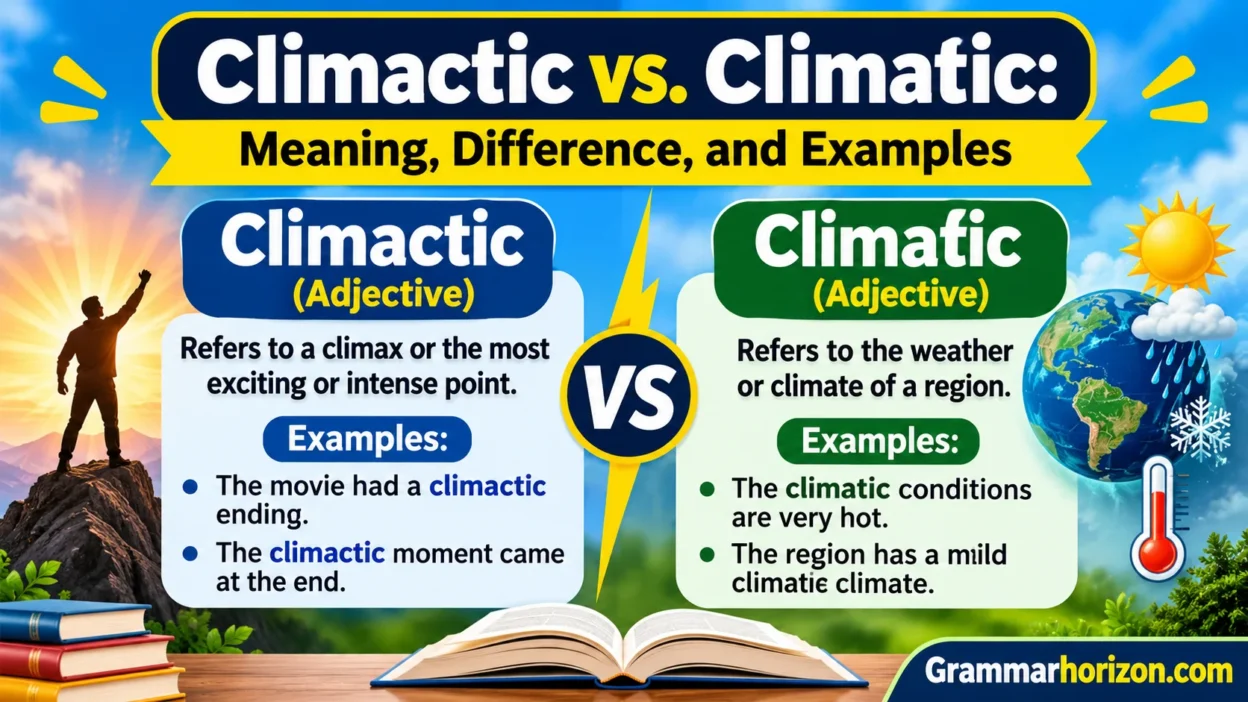
Climactic vs. Climatic can confuse English learners because these adjectives look alike but describe a story’s peak or a region’s climate patterns. Both words have different meanings and different uses, despite their similar spelling in the English language. Climactic describes the highest point, exciting point, or important point of an event, story, or experience. It relates to the climax, peak moment, and final scene in storytelling and story development. For example, a movie with a climactic ending can create a memorable experience for viewers.
For English learners and English writers, understanding these confusing words and similar-looking words becomes easier by studying their root words and word roots. Climactic comes from climax, while climatic comes from climate. These grammatical differences explain their adjective usage and correct usage in different sentences. For example, using “climactic conditions” to describe a region’s weather is a wrong word choice. The correct expression is “climatic conditions.” However, a climactic event describes an exciting or important moment rather than ordinary weather conditions.
This spelling confusion can change sentence meaning and affect sentence structure and writing accuracy. Paying attention to word meanings, word choice, and correct word selection helps improve your vocabulary, English grammar, and language learning. Whether you use these adjectives in everyday conversations, academic writing, or professional communication, choosing the right word supports clear communication and language clarity. Remembering the connection between climax and climactic, and climate and climatic, makes it easier to avoid mistakes.
Climactic vs. Climatic: Quick Answer
Climactic means relating to the climax or the highest and most important point of something. It describes an exciting moment, dramatic event, or decisive stage in a story or experience.
Example: The movie ended with a climactic battle between the hero and the villain.
Climatic means relating to climate or the general weather conditions of a particular region. It is commonly used when discussing temperature, rainfall, environmental conditions, and climate patterns.
Example: Farmers consider climatic conditions before choosing which crops to grow.
The easiest way to remember the difference is to associate climactic with climax and climatic with climate.
What Does Climactic Mean?
Climactic is an adjective that describes something connected with a climax. A climax is the highest point of excitement, tension, importance, or development in a series of events.
The word is commonly used in literature, movies, sports, speeches, and important experiences. It describes the moment when events reach their most significant or intense stage.
For example, a mystery novel may introduce several characters and clues before revealing the identity of the criminal. That final revelation can be called the climactic moment because it represents the most important point in the story.
A climactic moment does not always have to involve action or excitement. It can also describe an emotional conversation, an important decision, or a surprising discovery that changes the direction of an experience.
Examples of Climactic in Sentences
Here are some examples that show how to use climactic correctly:
- The movie’s climactic scene kept everyone interested until the end.
- The football match reached its climactic moment when the winning goal was scored.
- The novel builds toward a climactic confrontation between the two brothers.
- Her speech reached a climactic point when she announced the final decision.
- The final chapter contains the most climactic event in the entire story.
- The orchestra delivered a powerful performance during the climactic finale.
- The championship ended with a climactic victory for the underdog team.
In all these examples, climactic describes an important, exciting, or decisive moment. It does not refer to weather or environmental conditions.
Common Uses of Climactic
The word climactic appears in different situations where something reaches its highest point.
Movies and literature: Writers and filmmakers use climactic to describe the most important scene in a story. A climactic ending often brings the main conflict to a resolution.
Sports competitions: It describes decisive moments that can determine the result of a competition. A last-minute goal or winning shot can create a climactic moment.
Speeches and presentations: A speaker may build an argument toward a climactic statement that delivers the strongest message.
Personal experiences: People can use climactic to describe the most meaningful or exciting moment of a journey, celebration, or major life event.
What Does Climatic Mean?
Climatic is an adjective that means relating to climate or the general atmospheric conditions of a particular place. It is commonly used in geography, environmental science, agriculture, and discussions about climate change.
Climate refers to the usual weather patterns of a region over an extended period. These patterns include temperature, rainfall, humidity, wind, and seasonal conditions.
For example, tropical regions generally experience warmer temperatures than polar regions. These differences are related to their climatic conditions.
The word climatic is useful when explaining how environmental conditions affect plants, animals, agriculture, natural resources, and human activities. It can also describe long-term changes in weather patterns.
Examples of Climatic in Sentences
Here are some examples showing how to use climatic correctly:
- Farmers must understand climatic conditions before selecting crops.
- Scientists study climatic changes to understand global warming.
- The region has favorable climatic conditions for growing coffee.
- Temperature and rainfall are important climatic factors.
- Different climatic zones support different types of vegetation.
- The country experiences significant climatic variations throughout the year.
- Researchers examined the climatic effects of rising temperatures.
- Local wildlife has adapted to the area’s unique climatic patterns.
In these sentences, climatic describes environmental conditions and long-term weather patterns rather than dramatic events.
Common Uses of Climatic
The word climatic is common in several fields, particularly those related to the environment and natural sciences.
Climate change: Climatic is frequently used when discussing long-term changes in the Earth’s climate, including rising temperatures and changing rainfall patterns.
Agriculture and farming: Farmers consider climatic conditions when choosing crops, planning planting seasons, and managing water supplies.
Geography: Geographers use climatic to describe differences between tropical, temperate, arid, and polar regions.
Environmental science: Researchers examine climatic factors to understand how temperature, precipitation, and other environmental conditions affect ecosystems.
Wildlife and ecosystems: Climatic conditions influence animal habitats, plant growth, migration patterns, and biodiversity.
Climactic vs. Climatic: Key Differences
Although these words have similar spellings, their meanings and uses are different. The main distinction comes from their root words.
Climactic comes from climax, which means the highest or most exciting point of an event. Climatic comes from climate, which refers to the long-term weather conditions of a particular place.
Both words function as adjectives, but they describe different subjects.
Difference in Meaning
The most important difference is what each word describes.
- Climactic: Describes an important, exciting, or intense moment.
- Climatic: Describes something related to climate or weather patterns.
For example:
- The final match was the most climactic event of the tournament.
- The country’s climatic conditions support a wide range of crops.
The first sentence describes an exciting event, while the second discusses environmental conditions.
Difference in Word Origin
Understanding the origins of these words makes them easier to remember.
Climactic comes from the noun climax. The word climax refers to the highest point in a series of events or the most intense part of a story. Climactic developed from this word to describe something involving or forming a climax.
Climatic comes from the noun climate. It developed by adding the adjective-forming suffix -ic to climate. It describes things connected with the weather patterns and environmental conditions of a region.
Difference in Part of Speech
Both climactic and climatic are adjectives. This means they describe or provide additional information about nouns.
However, they modify different types of nouns.
| Climactic | Climatic |
| Climactic scene | Climatic conditions |
| Climactic moment | Climatic changes |
| Climactic battle | Climatic factors |
| Climactic ending | Climatic variations |
| Climactic finale | Climatic zones |
| Climactic confrontation | Climatic patterns |
The nouns following these adjectives provide useful clues about which word belongs in a sentence.
Difference in Context of Use
Climactic is appropriate when discussing stories, dramatic moments, competitions, and important experiences. It highlights the point where tension, excitement, or significance reaches its highest level.
Climatic is appropriate when discussing climate, geography, environmental science, and long-term weather patterns. It describes conditions that affect the natural environment.
Consider these two sentences:
- The climactic moment arrived when the winner was announced.
- Climatic conditions affect the availability of fresh water.
Both sentences are grammatically correct, but replacing one adjective with the other would change the intended meaning.
When to Use Climactic
Use climactic when you want to describe the highest or most important point in an event, story, or experience.
It is particularly useful when earlier events build toward a major moment.
Describing the Final Scene of a Movie
A movie often develops its characters and conflicts before reaching its most important scene. This scene may include a major revelation, confrontation, or resolution.
Example: The director created a powerful climactic scene that brought the entire story together.
Describing a Decisive Sports Moment
Sports competitions often include moments that determine the final result. A last-second goal, winning shot, or decisive play can be described as climactic.
Example: The basketball game reached its climactic moment when the player scored in the final second.
Describing a Turning Point in a Story
A turning point changes the direction of a story or determines what happens next. When that moment represents the highest point of tension, climactic is an appropriate adjective.
Example: The novel’s climactic confrontation reveals the truth about the main character’s past.
Describing an Important Event
Climactic can also describe the most significant moment of a public event, performance, or celebration.
Example: The concert ended with a climactic finale that received a standing ovation.
When to Use Climatic
Use climatic when discussing climate, environmental conditions, or long-term weather patterns.
It is especially common in scientific and geographical writing.
Describing Regional Climate Conditions
Different geographical areas have different climates. Some regions experience high temperatures and little rainfall, while others have cooler temperatures and regular precipitation.
Example: The desert has extreme climatic conditions, with very little rainfall throughout the year.
Discussing Climatic Changes
Climatic changes refer to changes in long-term climate patterns. These may involve rising temperatures, changing precipitation levels, and shifts in seasonal conditions.
Example: Researchers are studying climatic changes to understand their effects on coastal communities.
Explaining Climatic Influences on Agriculture
Agriculture depends heavily on environmental conditions. Temperature, rainfall, humidity, and seasonal patterns influence crop growth and agricultural productivity.
Example: Farmers select crops according to the climatic conditions of their region.
Discussing Climatic Factors Affecting Ecosystems
Plants and animals depend on environmental conditions for survival. Changes in temperature and rainfall can affect habitats, food supplies, and biodiversity.
Example: Several plant species cannot survive sudden changes in their natural climatic conditions.
Climactic vs. Climatic: Common Phrases and Collocations
Collocations are words that frequently appear together in natural English. Learning common combinations makes it easier to understand how climactic and climatic work in everyday and professional writing.
Common Expressions with Climactic
| Expression | Meaning |
| Climactic moment | The most important or exciting point |
| Climactic scene | The most significant scene in a story or movie |
| Climactic ending | An ending that reaches a major point of excitement |
| Climactic battle | The decisive or most important battle |
| Climactic finale | The most exciting concluding part |
| Climactic confrontation | A major or decisive encounter |
| Climactic event | The most important event in a series |
| Climactic point | The highest point of development or intensity |
Example: The story reaches its climactic ending when the main character finally discovers the truth.
Common Expressions with Climatic
| Expression | Meaning |
| Climatic conditions | Weather conditions associated with a region |
| Climatic changes | Changes in long-term climate patterns |
| Climatic factors | Environmental elements related to climate |
| Climatic variations | Differences in climate conditions |
| Climatic zones | Areas classified by their climate |
| Climatic patterns | Typical or changing climate characteristics |
| Climatic effects | Effects associated with climate |
| Climatic influences | Ways climate affects something |
Example: Temperature and rainfall are important climatic factors that influence agricultural production.
Conclusion
Understanding the difference between climactic vs climatic helps you use both adjectives correctly in writing and conversation. Climactic refers to the most exciting or important point of an event, story, or experience, while climatic relates to climate, weather conditions, and environmental patterns. Although these words have similar spelling, their meanings are different. Remembering that climactic comes from climax and climatic comes from climate will help you avoid spelling confusion and improve your English grammar, vocabulary, and writing accuracy.
Frequently Asked Questions
Q1. What is the difference between climactic and climatic?
Climactic describes the highest or most exciting point of an event or story. Climatic relates to climate, weather conditions, and environmental patterns.
Q2. Is climactic related to climax?
Yes. Climactic comes from the word climax. It describes the most important, exciting, or dramatic moment in a story, event, or experience.
Q3. Does climatic refer to weather conditions?
Yes. Climatic relates to climate, including temperature, rainfall, humidity, and other long-term weather patterns in a particular region.
Q4. Can climactic and climatic be used interchangeably?
No. These words have different meanings and cannot replace each other. Use climactic for an important moment and climatic when discussing climate or environmental conditions.
Q5. How can I remember the difference between climactic and climatic?
Connect climactic with climax, which means the highest point of something. Connect climatic with climate, which refers to long-term weather conditions. These simple word connections make the correct usage easier to remember.