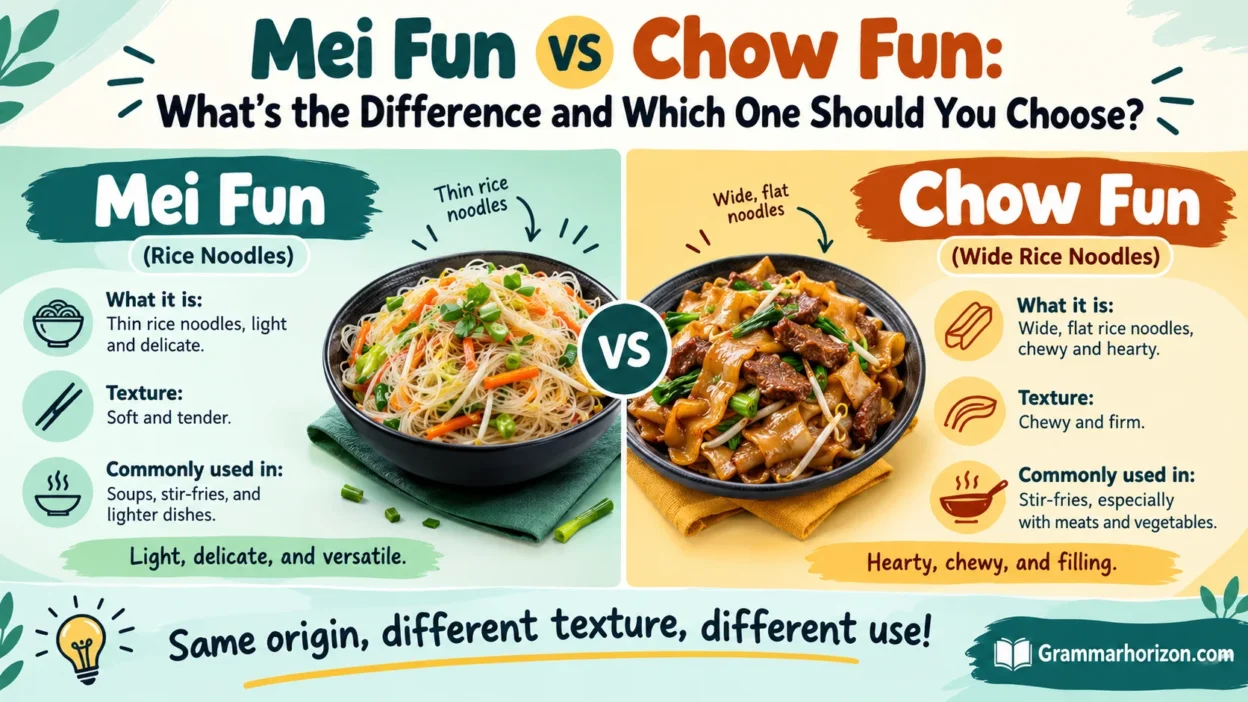
Mei Fun vs Chow Fun becomes easier to understand when you compare the noodle type, texture, cooking style, and flavour instead of focusing on their similar names. Mei Fun uses thin rice vermicelli, which gives the dish a delicate, light, and thread-like texture. Chow Fun, on the other hand, uses wide flat rice noodles that are generally soft, chewy, and heartier. Both Chinese noodle dishes can include vegetables, protein, and savoy sauce, making them popular choices on a Chinese restaurant menu.
The noodle shape also affects the cooking technique, sauce distribution, and overall eating experience. Mei Fun has fine noodles that can create an airy feel, while the broad noodles in Chow Fun provide a more substantial bite. Both dishes are often stir-fried with high-heat wok cooking, allowing the noodles and other ingredients to develop a pleasant texture and flavor. If you prefer a delicate noodle dish, Mei Fun may be the better choice, while Chow Fun can be more satisfying if you enjoy wider, softer, and chewier noodles.
Knowing this distinction can help you choose the right dish when you order and make it easier to appreciate the variety of Chinese food and cuisine. A detailed comparison of noodle type, texture, flavor, cooking style, and sauce distribution shows that neither dish is simply better than the other. Your preference depends on the kind of noodle, flavor, and texture you want. Whether you select Mei Fun for its thin rice vermicelli or Chow Fun for its wide flat rice noodles, the basic difference remains clear. Even the number 52 may appear in a recipe or reference context, but it doesn’t change the distinction between these two dishes.
Quick Answer: Mei Fun vs Chow Fun
Mei Fun is made with thin, round rice vermicelli. The noodles look like delicate strands and commonly appear in dishes such as Singapore Mei Fun, chicken Mei Fun, shrimp Mei Fun, and vegetable Mei Fun.
Chow Fun uses wide, flat rice noodles. These noodles are much broader and usually have a soft, slippery, chewy bite. Beef Chow Fun is one of the best-known versions, particularly in Cantonese-style cooking.
The easiest way to remember the difference is simple:
Mei Fun = thin rice noodles. Chow Fun = wide, flat rice noodles.
Neither noodle is automatically better. Your choice depends on whether you prefer delicate strands or broad, substantial noodles.
Comparison Overview
| Feature | Mei Fun | Chow Fun |
| Main noodle | Rice vermicelli | Flat rice noodle |
| Shape | Thin and round | Wide and flat |
| Texture | Light, delicate, springy | Soft, slippery, chewy |
| Common cooking method | Stir-frying or soup | Stir-frying |
| Popular dish | Singapore Mei Fun | Beef Chow Fun |
| Common proteins | Chicken, shrimp, pork, egg | Beef, chicken, shrimp, pork |
| Typical flavor | Mild with seasoning absorbed by thin noodles | Savory with strong wok and sauce flavors |
| Best known for | Fine noodle strands | Broad rice ribbons |
| Cooking challenge | Preventing clumping and overcooking | Keeping wide noodles intact |
The difference isn’t simply visual. Noodle shape changes how ingredients interact with the dish. Thin Mei Fun can become coated with seasoning throughout its strands, while broad Chow Fun gives sauces and wok-charred flavors a larger surface to cling to.
What Is Mei Fun?
Mei Fun is a Chinese rice-noodle dish made with thin, delicate rice vermicelli that’s commonly stir-fried with vegetables, meat, seafood, eggs, and savory seasonings.
Mei Fun Meaning and Noodle Type
Mei Fun refers to thin rice noodles commonly known as rice vermicelli. These noodles are generally made from rice and water, although commercial products can contain additional starches or other ingredients.
The noodles are narrow, flexible, and usually sold dried. Before cooking, they often need soaking or rehydration. Once prepared, they can be stir-fried with meat, seafood, vegetables, eggs, aromatics, and sauces.
The name can appear in different forms on restaurant menus. You may see Mei Fun, Mai Fun, rice vermicelli, or rice noodles, depending on the restaurant and its naming conventions.
What Does Mei Fun Look Like?
Mei Fun is easy to recognize once you’ve seen it. The noodles are thin strands rather than wide ribbons.
Think of a pile of fine threads. That’s much closer to Mei Fun than the broad noodles used for Chow Fun.
Because the strands are so narrow, they create a light appearance even when the serving contains plenty of noodles. They also tend to mix thoroughly with small pieces of vegetables, egg, shrimp, chicken, or pork.
What Does Mei Fun Taste Like?
The noodles themselves have a fairly mild rice flavor. Most of the character comes from the ingredients and seasonings used during cooking.
Soy sauce, curry powder, garlic, ginger, sesame oil, pepper, seafood, vegetables, and other aromatics can dramatically change the finished dish.
Thin noodles also pick up seasoning efficiently. That makes Mei Fun especially suitable for dishes where you want the noodles to carry flavor rather than simply provide a neutral base.
Popular Mei Fun Dishes
Common versions include:
- Singapore Mei Fun
- Chicken Mei Fun
- Shrimp Mei Fun
- Pork Mei Fun
- House Special Mei Fun
- Vegetable Mei Fun
- Xiamen-style Mei Fun
Singapore Mei Fun is particularly recognizable because many versions use curry powder, which gives the dish its characteristic yellow color and warm, savory flavor.
What Is Chow Fun?
Chow Fun is a Chinese noodle dish made with wide, flat rice noodles that are typically stir-fried with meat, seafood, vegetables, and savory sauces.
Chow Fun Meaning and Noodle Type
Chow Fun is a dish made with wide, flat rice noodles. These noodles are closely associated with Cantonese cuisine and Southern Chinese cooking.
You may also encounter the terms Ho Fun or Hor Fun. Different romanization systems and regional naming traditions account for many of these variations.
Unlike Mei Fun, Chow Fun noodles resemble broad ribbons. Their size gives them a completely different mouthfeel.
What Does Chow Fun Look Like?
The easiest way to identify Chow Fun is its width. Instead of thin strands, you’ll see large, flat strips of rice noodle.
The noodles can look somewhat similar to broad pasta at first glance. However, they’re made from rice rather than traditional wheat-based pasta.
Their broad surface also makes them excellent at carrying savory sauces, browned bits, and the flavors created by a hot wok.
What Does Chow Fun Taste Like?
Chow Fun noodles have a mild rice flavor, so the finished dish depends heavily on the cooking technique and accompanying ingredients.
A well-made stir-fried Chow Fun can develop deep savory notes from soy sauce, garlic, scallions, meat, and high-heat cooking. Beef Chow Fun is especially known for the combination of tender beef, onions or scallions, bean sprouts, and wide noodles.
When cooked properly, the noodles can develop wok hei, often described as the distinctive smoky, toasted character associated with fast cooking over intense heat.
Popular Chow Fun Dishes
Common examples include:
- Beef Chow Fun
- Chicken Chow Fun
- Shrimp Chow Fun
- Vegetable Chow Fun
- Pork Chow Fun
- Chow Fun with black bean sauce
Among these, beef Chow Fun is arguably the classic combination many diners associate with the dish.
Main Differences Between Mei Fun and Chow Fun
The main differences between Mei Fun and Chow Fun come down to noodle shape, texture, cooking method, and how each noodle pairs with sauces, proteins, and vegetables.
Noodle Shape and Size
This is the most important distinction.
Mei Fun is thin and round. Chow Fun is wide and flat.
The shape affects everything that follows, including texture, cooking time, sauce coverage, and how the noodles interact with other ingredients.
Texture
Mei Fun generally offers a lighter, finer bite. When properly cooked, the strands remain tender with some springiness.
Chow Fun delivers a soft, slippery, and more substantial texture. The broad noodles have more physical presence, so each bite feels heartier.
If thin noodles are your favorite, Mei Fun will probably feel more familiar. If you enjoy broad noodles with a satisfying chew, Chow Fun is the stronger choice.
Cooking Method
The two noodles also demand different handling.
Mei Fun can become mushy if it absorbs too much water before stir-frying. Overcooking can also cause the delicate strands to break or clump together.
Chow Fun presents the opposite challenge. Fresh wide noodles can stick together or tear if handled too aggressively.
A skilled cook needs to control heat, moisture, timing, and movement. Those details matter more than simply throwing noodles into a hot pan.
Sauce and Seasoning
Thin Mei Fun tends to become thoroughly coated with seasoning because sauces can spread across and between its many strands.
Chow Fun has broad surfaces that can hold sauce in a different way. When cooked over high heat, those surfaces can also pick up browned flavors from the wok.
Neither noodle requires one specific sauce. Recipes vary widely by region, restaurant, and cook.
Protein and Vegetable Pairings
Mei Fun works especially well with smaller pieces of vegetables, seafood, egg, chicken, and pork because the thin strands mix easily with other ingredients.
Chow Fun pairs particularly well with beef. The broad noodles provide enough substance to balance tender slices of meat, bean sprouts, scallions, onions, and savory sauces.
That doesn’t mean you can’t order shrimp Chow Fun or beef Mei Fun. You absolutely can. The traditional pairings simply reflect how the noodle textures work with different ingredients.
Mei Fun vs Chow Fun: Texture, Flavor, and Eating Experience
The Mei Fun vs Chow Fun difference becomes especially noticeable when you compare their texture, flavor, and overall eating experience. Mei Fun offers thin, delicate strands that feel light and tender, while Chow Fun delivers wide, soft noodles with a more substantial, chewy bite.
Which One Feels Lighter?
Mei Fun usually feels lighter, thanks to its thin strands and delicate texture.
However, “lighter” doesn’t automatically mean fewer calories. A Mei Fun dish cooked with generous amounts of oil, meat, egg, and sauce can contain substantial calories.
Portion size and preparation matter more than noodle shape alone.
Which One Is More Filling?
Chow Fun often feels more substantial because the wide noodles have a denser, chewier eating experience.
Still, the protein and vegetables in the dish play a major role in satiety. A vegetable-heavy Mei Fun with shrimp can be more filling than a small serving of plain Chow Fun.
Which One Carries Flavor Better?
Both do it well, just differently.
Mei Fun distributes seasoning across numerous thin strands. Chow Fun provides broad surfaces that interact strongly with sauces and high-heat cooking.
The result depends heavily on technique. A beautifully cooked noodle with balanced seasoning will outperform a poorly prepared version regardless of noodle style.
Mei Fun vs Chow Fun: Nutrition
The Mei Fun vs Chow Fun nutrition comparison depends largely on portion size, cooking oil, sauces, protein, and vegetables, since both rice-noodle dishes can vary considerably by recipe and preparation.
Calories and Macronutrients
There isn’t one universal calorie count for Mei Fun or Chow Fun.
Restaurant recipes vary in noodle quantity, cooking oil, sauce, meat, eggs, and vegetables. Two dishes with the same name can therefore have very different nutritional profiles.
A useful comparison looks beyond the noodles themselves.
| Factor | What Changes Nutrition |
| Noodle portion | More noodles generally mean more carbohydrates and calories |
| Cooking oil | Extra oil can significantly increase calories |
| Protein | Meat, shrimp, chicken, and eggs add protein |
| Vegetables | Add fiber, vitamins, and minerals |
| Sauce | Can contribute sodium, sugar, and calories |
| Restaurant portion | Larger servings increase total intake |
Are Mei Fun and Chow Fun Gluten-Free?
Plain rice noodles are naturally gluten-free. However, the finished restaurant dish may not be.
Soy sauce commonly contains wheat, and some prepared sauces may also contain gluten-containing ingredients. Cross-contact during cooking can matter as well.
If you need to avoid gluten, don’t assume a rice-noodle dish is automatically safe. Ask about the noodles, sauces, and preparation.
Which Is Healthier?
There isn’t a universal winner.
A vegetable-heavy Mei Fun prepared with moderate oil may be a lighter choice than a heavily sauced Chow Fun. On the other hand, a modest portion of Chow Fun with lean protein and vegetables can fit comfortably into a balanced meal.
Preparation matters more than the noodle’s name.
Mei Fun vs Chow Fun: Cooking at Home
Cooking Mei Fun vs Chow Fun at home requires different handling techniques because thin rice vermicelli needs gentle cooking, while wide Chow Fun noodles require careful tossing to keep them intact and prevent sticking.
How to Prepare Mei Fun
For dried Mei Fun, start by following the package directions for soaking or cooking.
Once the noodles soften, drain them well. Prepare your vegetables, protein, aromatics, and sauce before heating the pan.
A hot wok or large skillet works best. Cook the other ingredients first, then add the noodles toward the end.
The goal is simple: heat the noodles without turning them soft and soggy.
How to Prepare Chow Fun
Fresh Chow Fun noodles require gentle handling. Separate them carefully so they don’t tear.
Heat the wok thoroughly before adding ingredients. Cook the protein and vegetables first, then add the noodles and sauce.
Avoid constant stirring. Wide rice noodles can break when tossed too aggressively.
Common Cooking Mistakes
Watch out for these problems:
- Over-soaking Mei Fun
- Overcooking either noodle
- Crowding the wok
- Adding too much liquid
- Using low heat for stir-frying
- Stirring delicate noodles too forcefully
- Adding sauce before the pan is properly heated
Good noodle cooking is partly about restraint. Sometimes the best move is to leave the noodles alone for a moment.
Read More:Loosing vs Losing: What Is the Difference & Which Is Correct?
Conclusion
The difference between Mei Fun vs Chow Fun mainly comes down to the noodle type, shape, texture, and cooking experience. Mei Fun features thin rice vermicelli with a lighter, delicate feel, while Chow Fun uses wide flat rice noodles with a softer and chewier texture. Both dishes can contain vegetables, protein, and savory sauce and are commonly prepared through stir-frying. Ultimately, the best choice depends on whether you prefer thin, delicate noodles or wide, hearty noodles.
FAQs
Q1. What is the main difference between Mei Fun and Chow Fun?
The main difference is the noodles. Mei Fun uses thin rice vermicelli, while Chow Fun uses wide, flat rice noodles.
Q2. Which is thinner, Mei Fun or Chow Fun?
Mei Fun is thinner because it uses fine, thread-like rice vermicelli. Chow Fun has much wider and flatter noodles.
Q3. Is Mei Fun healthier than Chow Fun?
Neither is automatically healthier. The nutritional value depends on the ingredients, cooking method, sauce, protein, and portion size used in the dish.
Q4. Is Chow Fun chewy?
Yes, Chow Fun typically has a soft and chewy texture because of its broad, flat rice noodles.
Q5. Does Mei Fun contain rice noodles?
Yes. Mei Fun is made with thin rice vermicelli, which is a type of rice noodle.
Q6. Which one should I order, Mei Fun or Chow Fun?
Choose Mei Fun if you like thin, light, delicate noodles. Choose Chow Fun if you prefer wide, soft, chewy, and hearty noodles.
Q7.Are Mei Fun and Chow Fun cooked the same way?
They can both be stir-fried in a wok, but their different noodle shapes and textures affect the cooking process, sauce distribution, and final eating experience.