How Long vs How Much Time helps English learners choose clear questions when discussing duration, available time, deadlines, and everyday tasks. Both expressions have similar forms but communicate different meanings depending on the situation and the speaker’s emphasis. In English, how long usually focuses on the duration of an activity, event, or situation, while how much time asks about the amount of time involved. These commonly used expressions sometimes create confusion during language learning, but understanding their differences improves your English usage and helps you communicate clearly.
A meeting provides a useful practical example of their different purposes. You can ask, “How long does the meeting last?” when you want to know its meeting duration or how long the meeting lasts. However, “How much time do we have for the meeting?” focuses on the meeting time and time available. The same distinction applies to a task, deadline, or assignment. You might ask about time needed to finish a task, time remaining before a deadline, or time spent completing an assignment. These examples explain the difference between asking about duration and asking about amount. Although both are correct expressions, they present different ideas through their sentence meaning and question structure.
In everyday conversations, using the right expression helps you ask clearer questions and avoid confusion for the listener. In academic writing, these time expressions help explain how long an activity takes or how much time a particular task requires. Similarly, professional communication often involves discussing a project, planning specific work, and checking time availability. Your choice depends on the context and correct usage. Whether you participate in casual conversations, handle professional situations, or write in an academic context, remember that how long emphasizes the length of something, whereas how much time emphasizes the amount of time required.
Quick Answer: How Long vs How Much Time
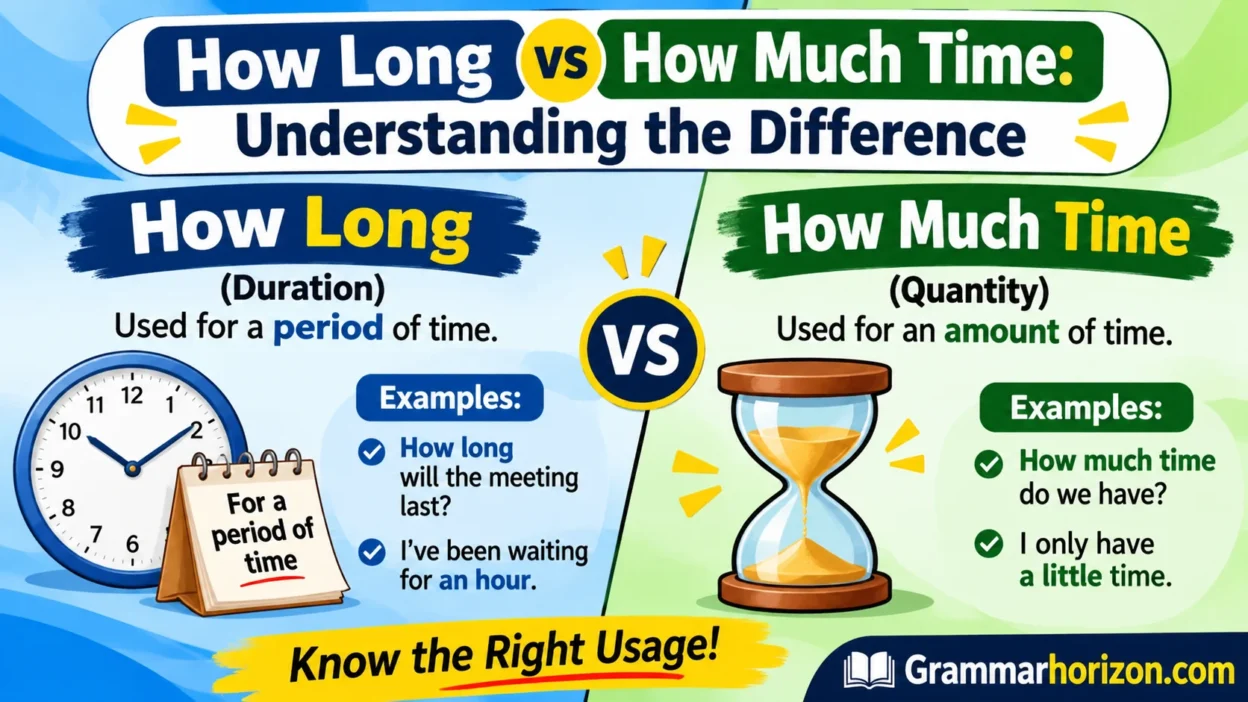
How long and how much time are both grammatically correct expressions. However, they have slightly different uses.
- How long: Asks about the duration or length of an activity, event, or situation.
- How much time: Asks about the quantity of time needed, available, remaining, or spent.
Consider these examples:
| How Long | How Much Time |
| How long does the movie last? | How much time do we have to watch the movie? |
| How long will the journey take? | How much time do we need for the journey? |
| How long did you study? | How much time did you spend studying? |
| How long is the meeting? | How much time do we have for the meeting? |
The easiest way to remember the difference is that how long focuses on duration, while how much time focuses on the amount of time.
Both expressions can sometimes be used in similar questions. The correct choice depends on the intended meaning.
What Does How Long Mean?
How long is an English expression used to ask about the duration of something. It helps determine how much time an activity, event, process, or situation takes or continues.
People commonly use how long when asking about meetings, journeys, movies, lessons, waiting periods, and personal experiences.
For example:
- How long does the flight take?
- How long is the examination?
- How long have you lived in this city?
- How long will the construction work continue?
- How long did you wait for the doctor?
In each example, the speaker wants to know the duration of something.
How Long in Present Tense
Use how long with the present tense when asking about the usual or current duration of an activity.
Examples:
- How long does the class last?
- How long is the lunch break?
- How long do you exercise every day?
- How long does it take to prepare breakfast?
These questions usually ask about the normal duration of an activity or event.
How Long in Past Tense
Use how long with the past tense when asking about the duration of something that happened in the past.
Examples:
- How long did the interview last?
- How long did you stay at the hotel?
- How long did the repair take?
- How long did they wait for the bus?
The answers usually include a period of time, such as two hours, three days, or thirty minutes.
How Long in Future Tense
Use how long with the future tense when asking about the expected duration of an upcoming activity.
Examples:
- How long will the meeting take?
- How long will the journey last?
- How long will it take to finish the assignment?
- How long will the delivery take?
These questions are useful when planning activities and estimating how much time an event or task will require.
How Long in Present Perfect Tense
The expression how long is also common with the present perfect tense. It asks about an activity or situation that started in the past and continues into the present.
Examples:
- How long have you worked here?
- How long have they known each other?
- How long has she lived in London?
- How long have you been learning English?
This structure is particularly useful when discussing personal experiences, employment, relationships, and ongoing activities.
What Does How Much Time Mean?
How much time is an expression used to ask about the quantity or amount of time associated with an activity, task, or situation.
Unlike how long, which generally focuses on duration, how much time often emphasizes the amount of time someone needs, has available, or spends doing something.
For example:
- How much time do you need to finish the assignment?
- How much time is left before the examination?
- How much time do we have before the train arrives?
- How much time did you spend preparing dinner?
- How much time should I dedicate to studying?
These questions focus on the quantity of time rather than simply asking how long an event lasts.
Why Is How Much Time Correct Instead of How Much Time?
One important grammar rule explains why how much time is correct.
In English, time is generally an uncountable noun when it refers to a quantity or duration. Uncountable nouns are normally used with much rather than many.
For example:
- How much time do you have?
- How much water do we need?
- How much money did you spend?
- How much information is available?
We use many with countable plural nouns, such as books, students, hours, and days.
Examples:
- How many hours do you need?
- How many days will you stay?
- How many minutes are left?
- How many weeks will the project take?
Therefore, “How many times do you need?” is grammatically incorrect when asking about an amount of time.
The correct expression is “How much time do you need?”
How Much Time in Present Tense
Use how much time with the present tense when asking about the amount of time someone needs or has available.
Examples:
- How much time do you need?
- How much time does the assignment require?
- How much time is available?
- How much time do we have for lunch?
These questions are common in daily conversations, workplaces, and educational environments.
How Much Time in Past Tense
Use how much time with the past tense when asking about the amount of time someone spent or had available in the past.
Examples:
- How much time did you spend at the library?
- How much time did the repair require?
- How much time was available during the examination?
- How much time did she spend preparing for the interview?
These questions help explain how much time an activity or responsibility is required.
How Much Time in Future Tense
Use how much time with the future tense when asking about the expected amount of time needed or available.
Examples:
- How much time will we need?
- How much time will the preparation require?
- How much time will be available tomorrow?
- How much time will you spend completing the project?
This structure is especially useful when discussing plans, deadlines, and future responsibilities.
Main Differences Between How Long vs How Much Time
Although how long and how much time are closely related, they do not always communicate exactly the same meaning.
The most important difference is the information each expression emphasizes.
How long focuses on duration. It asks about the length of an event, activity, or situation.
How much time focuses on quantity. It asks about the amount of time required, available, remaining, or spent.
Consider the following comparison:
| Comparison | How Long | How Much Time |
| Main meaning | Duration | Amount of time |
| Main focus | Length of an activity | Quantity of time |
| Common use | Events and activities | Time requirements and availability |
| Example | How long is the class? | How much time do we have for the class? |
| Typical answer | Two hours | Two hours |
| Grammar | How long + verb structure | How much time + verb structure |
Difference in Meaning
The expressions can sometimes produce similar answers, but they ask different questions.
For example:
- How long will the project take?
- How much time will the project require?
Both questions ask about the expected duration of the project. However, the first sounds like a general question about duration, while the second places more emphasis on the quantity of time needed.
Consider another example:
- How long is your lunch break?
- How much time do you have for lunch?
The first question asks about the total duration of the break. The second asks about the amount of time available to the person.
Difference in Everyday Usage
How long is generally more direct and conversational when asking about the duration of something.
For example, “How long does the movie last?” is a natural way to ask about a movie’s running time.
How much time is especially useful when discussing schedules, deadlines, resources, and available time.
For example, “How much time do we have to complete the assignment?” focuses on the time available before the deadline.
Neither expression is universally better. Both are useful in the right context.
When to Use How Long
Use how long when you want to ask about the duration of an activity, event, or situation.
It is especially common when asking how long something takes, how long something continues, or how long someone has experienced a particular situation.
Asking About the Duration of an Activity
When you want to know how long an activity takes, how long is usually the most natural choice.
Examples:
- How long does it take to cook rice?
- How long does it take to clean the house?
- How long does the exercise session last?
- How long does it take to learn basic English?
These questions ask about the length of time required to complete or perform an activity.
Asking About Events
Use how long when asking about the duration of scheduled events.
Examples:
- How long is the wedding ceremony?
- How long will the conference last?
- How long is the football match?
- How long does the school assembly take?
This structure is useful when discussing events that have a beginning and an end.
Asking About Personal Experiences
How long can also ask about the length of time someone has experienced a situation or maintained an activity.
Examples:
- How long have you been married?
- How long have you worked at this company?
- How long have you known your friend?
- How long have you been learning English?
These questions commonly use the present perfect tense because they refer to situations that started in the past and may continue in the present.
When to Use How Much Time
Use how much time when you want to know the amount of time needed, available, remaining, or spent on an activity.
This expression is especially useful when discussing time management, planning, deadlines, and daily responsibilities.
Asking About Time Requirements
When you need to know how much time a task requires, use how much time.
Examples:
- How much time do you need to complete the report?
- How much time does it take to prepare this meal?
- How much time should I spend learning new vocabulary?
- How much time will the repair require?
These questions focus on the quantity of time necessary to complete something.
Asking About Available Time
Use how much time when asking how much time someone has before a particular event or deadline.
Examples:
- How much time do we have before the meeting?
- How much time is available for the examination?
- How much time do you have to finish your homework?
- How much time is left before the shop closes?
This usage is common in situations that involve schedules and limited time.
Asking About Time Spent
How much time is also appropriate when asking about the amount of time someone has spent doing something.
Examples:
- How much time did you spend studying?
- How much time have you invested in this business?
- How much time do you spend exercising every week?
- How much time did she spend preparing for the interview?
In these examples, the speaker wants to know the quantity of time used for an activity.
Can How Long and How Much Time Be Used Interchangeably?
Yes. How long and how much time can sometimes be used interchangeably without changing the basic meaning of a question.
However, the expressions may emphasize slightly different things.
For example:
- How long will it take to complete the assignment?
- How much time will it take to complete the assignment?
Both questions ask about the duration required to finish the assignment. The first is more direct and focuses on duration. The second emphasizes the amount of time required.
Consider another example:
- How long did you spend at the library?
- How much time did you spend at the library?
Both questions ask about the duration of a person’s visit. The second places slightly more emphasis on the quantity of time spent.
However, not every sentence allows the expressions to be exchanged naturally.
For example:
– How much time do we have before the examination?
This question asks about the time remaining before the examination. Replacing how much time with how long would change the sentence structure and potentially the intended meaning.
Similarly:
– How long is the examination?
This asks about the examination’s duration. It does not ask how much time is available before it begins.
Therefore, always consider the meaning you want to communicate before choosing an expression.
How Long vs How Much Time in Different Situations
Both expressions appear in everyday communication, but their use depends on the situation.
Understanding practical examples makes it easier to choose the correct phrase.
In Everyday Conversations
In daily conversations, people frequently ask about the duration of activities and the amount of time available.
For example:
- How long does it take to get ready?
- How much time do you need before we leave?
- How long will you stay at your friend’s house?
- How much time do we have before dinner?
The first and third questions focus on duration. The second and fourth focus on the amount of time required or available.
In Education and Studying
Students and teachers use both expressions when discussing lessons, examinations, assignments, and study schedules.
For example:
- How long is the English lesson?
- How much time do students have to complete the test?
- How long did you study for the examination?
- How much time should I spend practicing grammar?
The distinction is particularly useful during examinations.
A teacher might ask, “How long is the examination?” to explain its total duration. A student might ask, “How much time do we have left?” to find out how much time remains before the examination ends.
At Work and in Professional Settings
Professional environments involve meetings, deadlines, projects, and schedules. Both expressions are useful in workplace communication.
Examples:
- How long will the presentation last?
- How much time do we need to finish the report?
- How long does the training session take?
- How much time is available for the discussion?
These questions help employees understand schedules and manage their responsibilities.
For example, a project manager might ask how long a meeting will last when planning the workday. The same manager might ask how much time the team needs to complete a task before setting a deadline.
In Travel and Transportation
Travel is another situation where both expressions are commonly used.
Examples:
- How long does the flight take?
- How much time do we have before boarding?
- How long is the bus journey?
- How much time do we need to reach the airport?
A traveler asking about the flight duration would naturally use how long. Someone checking the time remaining before boarding would use how much time.
These differences make travel conversations clearer.
Conclusion
Understanding the difference between how long and how much time helps you communicate more clearly in everyday and professional situations. Use how long when asking about the duration of an activity, event, or situation. Use how much time when asking about the amount of time available, needed, remaining, or spent. Both expressions are correct, but choosing the right one makes your questions more natural and easier to understand. With regular practice, you can use these expressions confidently in conversations, academic writing, and professional communication.
Frequently Asked Questions
Q1. What is the main difference between how long and how much time?
How long asks about the duration of something, while how much time asks about the amount of time available, needed, or used.
Q2. Is how long grammatically correct?
Yes, how long is grammatically correct. You can use it to ask about the duration of an activity, event, meeting, or situation.
Q3. Is how much time grammatically correct?
Yes, how much time is correct. It asks about the quantity of time someone has, needs, or spends on something.
Q4. Can I use how long and how much time interchangeably?
Not always. Both expressions relate to duration, but they have different focuses. How long asks about the length of time, whereas how much time emphasizes the amount of time.
Q5. Should I say how long it takes or how much time it takes?
Both are correct. How long does it take? is more common in everyday conversations, while how much time does it take? places more emphasis on the amount of time required.